Williamsdale BESS – A project for generations
From Ecogeneration Magazine, written by Lavinia Hulley
A landmark battery system, capable of supplying a third of Canberra’s peak power, is redefining renewable energy collaboration through engineering excellence, community care and close cooperation.
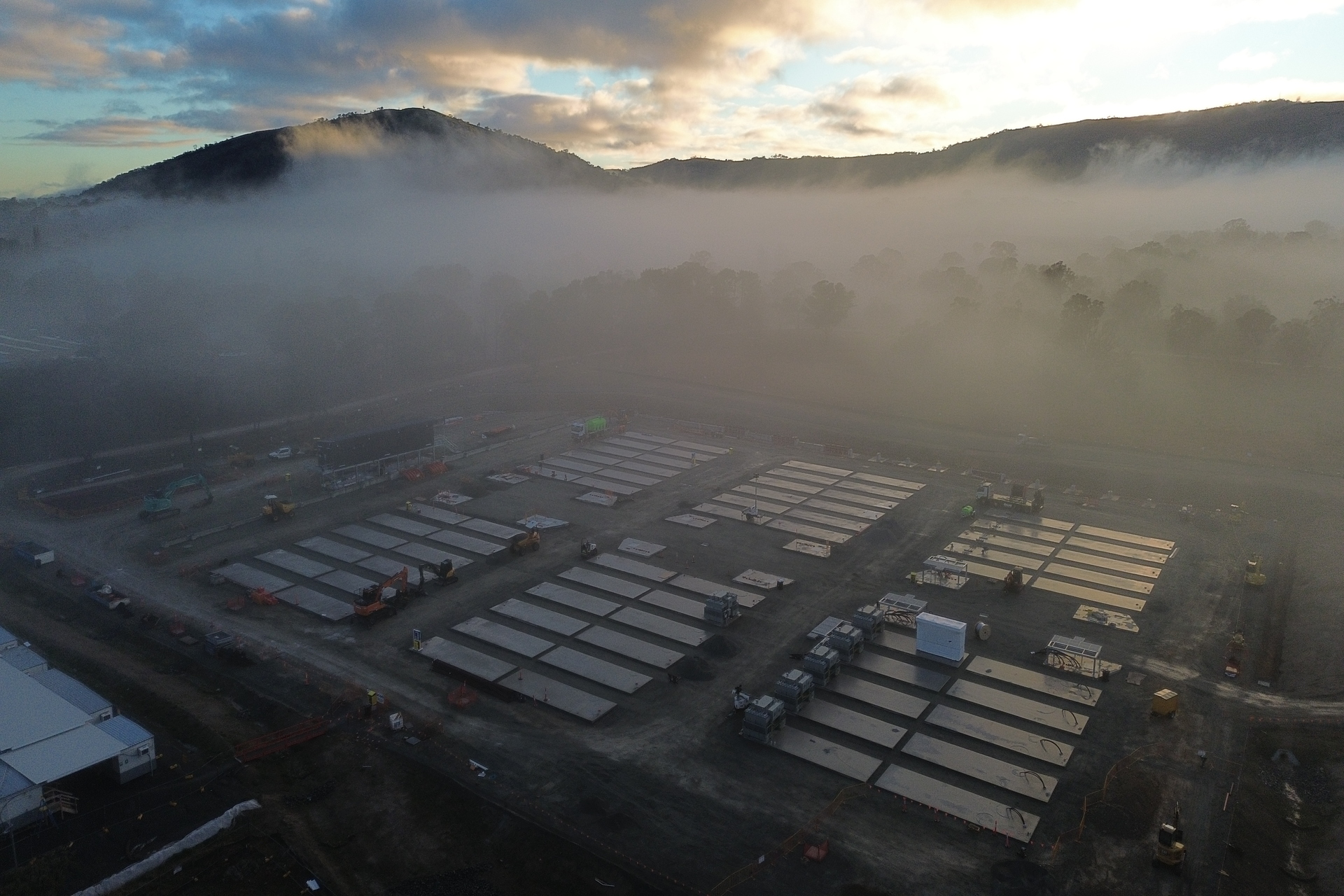
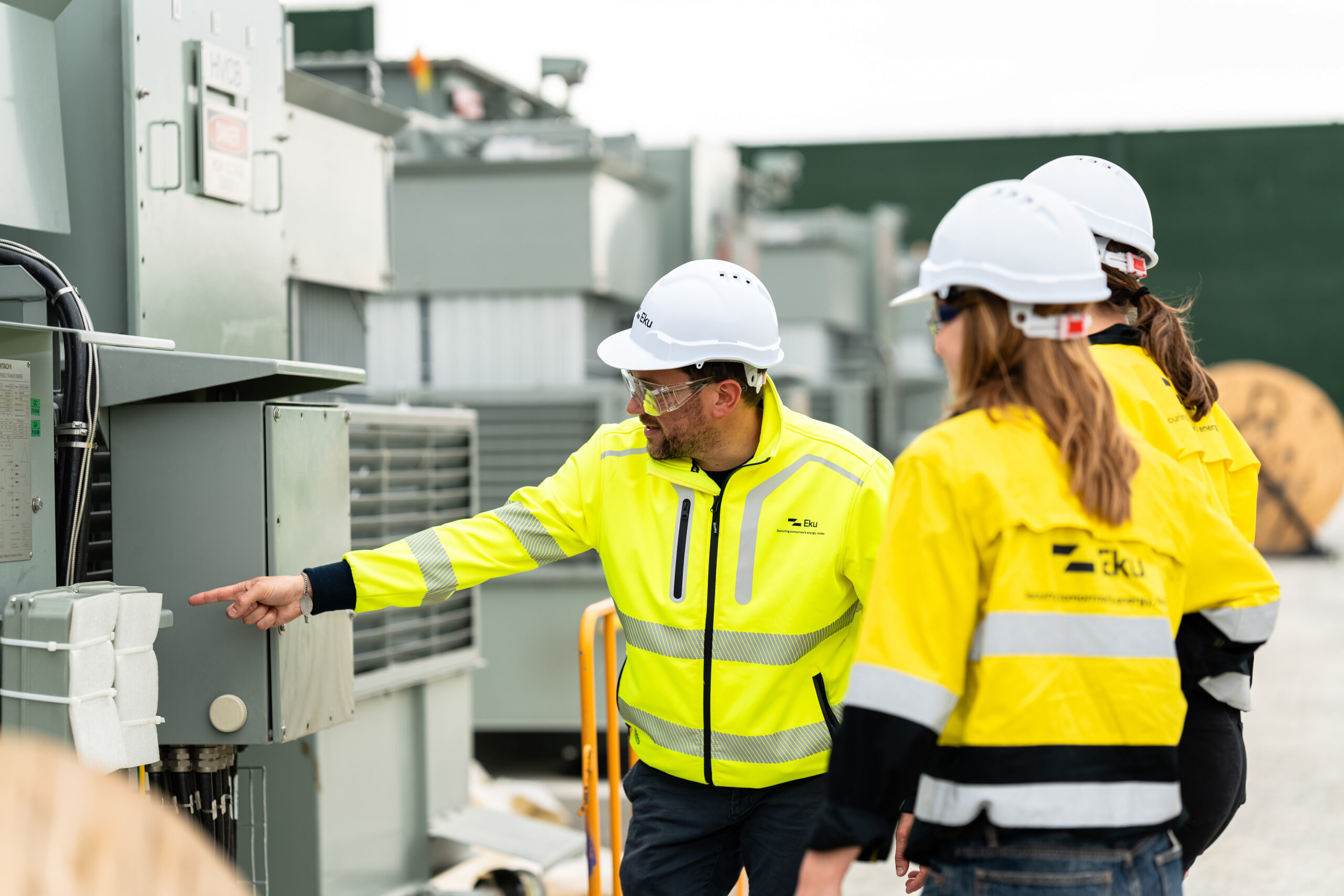
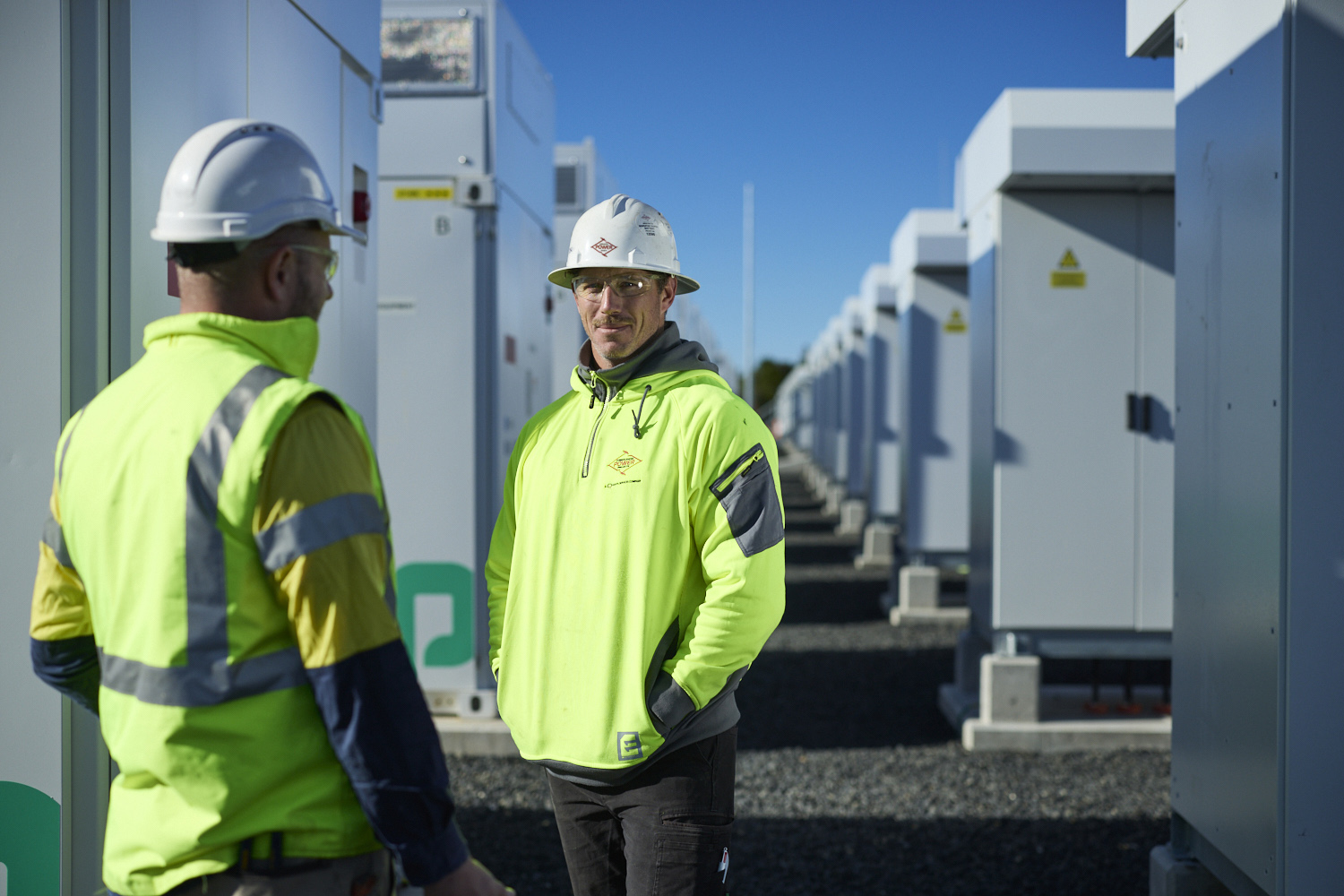
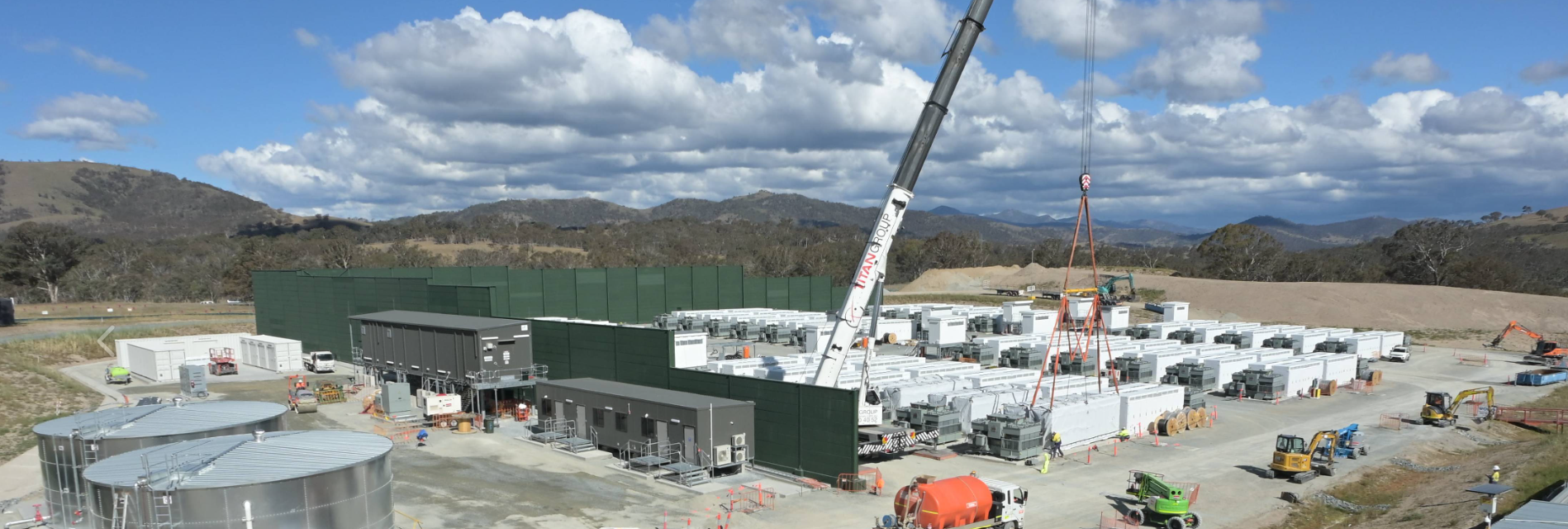
On the outskirts of Canberra, a nine-metre-high green wall stands as both a visual landmark and a symbol of cooperation. Behind it hums one of Australia’s most ambitious renewable energy assets – a 250-megawatt (MW) / 500 MWh (megawatt-hour) battery energy storage system (BESS) capable of supplying roughly one-third of the Australian Capital Territory’s (ACT) power needs during peak periods.
The project, led by Eku Energy with Consolidated Power Projects Australia Pty Ltd (CPP) as principal delivery partner, is set to become the largest energy storage installation ever built in the ACT.
It is also a textbook example of communication, safety and innovation, demonstrating how well-aligned project partners can accelerate the energy transition without compromising community expectations.
“This project really puts rubber to the road for the ACT. It’s not just about policy rhetoric, it’s a tangible example of what net-zero ambitions look like when they come to life on the ground,” says Tom Best, Chief Operating Officer at Eku Energy.
For both teams, success begins with respect for place. One of the project’s most distinctive features, a nine-metre-high acoustic wall, was conceived not for grandeur, but for neighbourliness.
“What is unique here is the sheer scale,” says James Bolton, Project Manager at CPP.
“Most highway noise barriers are around five metres high. Ours reaches nine metres. It has been designed to minimise even the faint hum of battery-cooling fans during the quiet overnight hours,” Bolton adds.
The wall’s deep-green colour palette was selected in consultation with local council planners to blend with the rural surrounds. Though the system operates quietly, both companies wanted to exceed regulatory expectations.
“We take community impact seriously. The acoustic design came directly out of early planning and consultation work. It was part of making sure nearby residents experienced no disruption from a project that ultimately benefits the whole territory,” says Bjorn Schultz, Global Project Delivery Manager at Eku Energy.
Engineering through the elements
Constructing a major battery facility in Canberra’s crisp winters brought its own challenges. With sub-zero mornings and frozen ground, conventional processes had to adapt.
“It was colder than most of our regional jobs. We even had to warm the water used in our concrete pours to prevent freezing. You would see 80 guys huddled around heaters during pre-start meetings – our typical morning ritual,” Bolton says.
Cold weather was not the only test. The team also introduced advanced drone technology to improve site surveying and progress tracking.
“The drones follow automated flight paths, capturing precise imagery at set points. This allowed us to track progress, share updates with internal and external stakeholders, and reduce the need for on-foot inspections. It was efficiency and safety rolled into one,” Bolton says.
Complementing the drones, CPP used 3D LiDAR surveying to guide the delivery of heavy transformers and high-voltage equipment, ensuring millimetre accuracy onsite.
“These kinds of innovations have moved from nice-to-have to essential on projects of this scale. They helped us deliver faster, safer, and with less environmental disturbance,” Bolton adds.
Collaboration built on trust
While technology enabled progress, people defined success. For both CPP and Eku Energy, the project’s collaborative structure that combined early-works involvement with open communication was key to maintaining momentum.
“We approached this as partners from day one,” says Schultz.
“During the early-works phase, we were developing the design together, ironing out the details before construction kicked off. That early alignment created trust – and that trust carried through every stage of delivery,” he adds.
Bolton agrees, emphasising the value of Eku Energy’s consistent on-site presence.
“Eku struck a great balance for the client-contractor relationship,” Bolton says.
“They do not just sit in a distant office, but they also do not micromanage either. Their team visits regularly, brings guests through the site, and helps us solve issues on the spot. It is professional but personable – exactly how collaboration should work,” Bolton adds.
The partnership has gone a full year without a single reportable safety incident, a milestone that both organisations attribute to their shared culture and disciplined communication.
“Safety is not just a metric, it is a mindset, driven by a genuine joint effort. Everyone here goes home safely each day, which we’re all proud of,” Schultz reflects.
Community first, always
Even as earthworks and heavy machinery transformed the site, surrounding residents experienced little change in daily life, by design.
“Community consultation started early and never stopped,” says Tom Best, Chief Operating Officer at Eku Energy.
“We have kept lines of communication open so locals know what’s happening, when and why,” he adds.
As part of its community-benefit commitments, Eku Energy established a grant program supporting community initiatives across Canberra.
The program is called Powering Big Dreams and channels project benefits directly into local entities; including, not-for-profits, charities, environmental groups, and similar services that offer community support and empowerment. This ensures energy transition delivers social value alongside economic and environmental returns.
“The ACT Government have made it clear that clean energy should create shared prosperity. We are proud that this project reflects that vision, not only through jobs and emissions reduction, but through tangible investment in the community,” Best explains.
Regional onsite crew culture
CPP’s national footprint means many of its crews are seasoned veterans of regional construction.
Bolton explains that experience shaped the project’s onsite culture.
“There is a family feel onsite. A lot of our site team have been with CPP for years, and they bring newer local workers into that culture. It is a mix of regional pride and professional discipline,” Bolton says.
He credits the strong work ethic of regional tradespeople and the continuity of experienced supervisors for keeping morale and productivity high through the colder months.
“They really care about what they build. For most of them, it’s their own backyard and so they want to see it done right,” Bolton adds.
Supporting Canberra’s clean energy vision
At full operation, the 250 MW / 500 MWh system will store surplus renewable power from the ACT’s solar farms and rooftop arrays and dispatch it during evening peaks, helping to balance supply and demand. In doing so, it directly advances the ACT’s target of achieving net-zero by 2045.
“The system acts as a reliability anchor. It soaks up excess renewable generation (those green electrons) and releases them when the grid needs it most. This strengthens stability without adding emissions,” Best says.
Bolton agrees that battery storage represents the next frontier in Australia’s renewable integration.
“Batteries are enabling technology. They make more wind and solar viable by bridging the gap between generation and use. The batteries do not just act as storage, they enable flexibility and are future-proofing the grid,” he says.
New lessons and possibilities
With construction milestones being reached and commissioning on the horizon, both companies are already reflecting on what comes next.
“Every project teaches you something new,” Bolton says.
“We have solved challenges here that will make future projects even smoother. The key takeaway is how effective joint problem-solving can be when trust is established early,” he adds.
For Schultz, the focus is on continuous collaboration and innovation.
“We are already planning the next wave of projects with CPP. This one proved that we could deliver large-scale infrastructure safely, efficiently and with genuine community engagement. The next challenge is scaling that model,” Schultz says.
Both agree that the legacy of Canberra’s flagship battery will extend far beyond its physical footprint.
“For us, it is about demonstrating that the transition to renewables can be orderly, safe and beneficial for everyone. We have shown that with the right partners, you can build big and still build responsibly,” Best says.
The promise of power stored, and shared
As Australia’s appetite for electricity grows – fuelled by data centres, electrification and industry decarbonisation – projects like the Williamsdale BESS will play an increasingly vital role.
The Williamsdale BESS is not just a technical achievement, it is a statement about what coordinated, forward-looking energy development looks like.
“The Williamsdale BESS would not have been possible without the Australian National University’s Battery Storage and Grid Integration program – a collaboration between science and academia, government and the private sector to support the ACT energy transition,” Schultz says.
“Going green does not mean using less power, it means using it smarter. Batteries like this are the bridge between ambition and action,” Best concludes. With its blend of engineering ingenuity, community focus and collaborative spirit, the ACT’s largest battery project offers a blueprint for the clean-energy decade ahead, one built not only on megawatts and megawatt-hours, but on trust and shared purpose.